Why Having a Website Isn’t Enough Anymore
The Illusion of “Being Online”
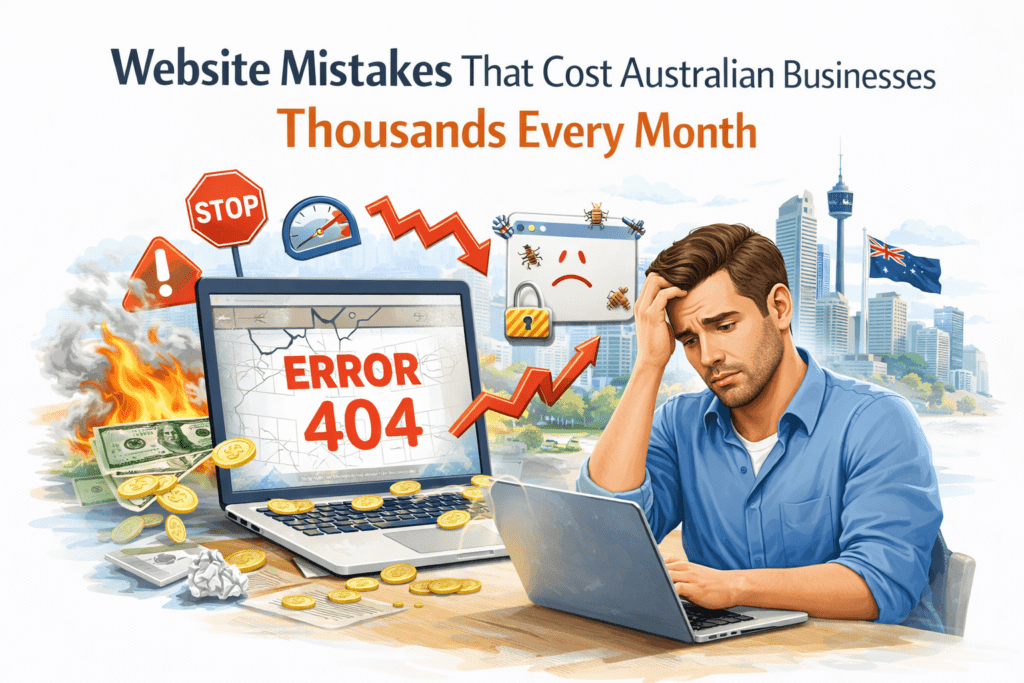
A lot of Australian businesses believe that simply having a website means they’ve “ticked the box” for digital marketing. The site is live, it looks decent, and maybe it even gets some traffic. But here’s the uncomfortable truth—we’ve seen countless businesses with websites that do absolutely nothing for their bottom line.
Being online isn’t the same as being effective online. A website without a clear conversion strategy is like a shop with no staff, no signage, and no checkout. People might walk in, but they won’t stay—and they definitely won’t buy.
This is one of the most common issues in business website mistakes. Owners invest time and money into building a site, then assume the hard part is done. In reality, that’s just the starting point.
Your website should function as a sales system. Every page, every element, every piece of content should guide visitors toward taking action. Without that structure, your site becomes a passive asset instead of an active growth tool.
Traffic Without Conversions
Another major problem we see is businesses focusing heavily on getting traffic—but ignoring what happens after visitors arrive. You might be running ads, doing SEO, or posting on social media, but if your website isn’t converting, all that effort goes to waste.
Think of it like pouring water into a bucket full of holes. You can keep increasing traffic, but if your website conversion Australia strategy is weak, you’ll never see meaningful results.
We’ve worked with businesses that had thousands of monthly visitors but barely any enquiries. Once we analysed their websites, the issues were obvious—unclear messaging, poor user experience, and no clear path to conversion.
The goal isn’t just to attract visitors. It’s to turn those visitors into leads, customers, and revenue.
Mistake 1: Unclear Value Proposition
Why Visitors Leave in Seconds
When someone lands on your website, you have only a few seconds to capture their attention. If they don’t immediately understand what you offer and why it matters, they leave. It’s that simple.
One of the biggest business website mistakes is assuming that visitors will take the time to figure things out. They won’t. Online attention spans are incredibly short, and competition is just one click away.
We often see websites with vague headlines like “Welcome to Our Company” or “Quality Services You Can Trust.” These don’t communicate anything meaningful. They don’t answer the key question every visitor has: What’s in it for me?
How to Communicate Your Offer Clearly
A strong value proposition is clear, specific, and focused on the customer. It should immediately explain what you do, who you help, and what makes you different.
For example, instead of generic messaging, focus on outcomes. What problem do you solve? What result can the customer expect?
Clarity always beats creativity when it comes to conversions. If users understand your offer instantly, they’re far more likely to stay and explore further.
Mistake 2: Poor Website Design and User Experience
First Impressions Matter More Than You Think
Design isn’t just about aesthetics—it directly impacts how users perceive your business. A cluttered, outdated, or confusing website creates doubt. Even if your service is excellent, poor design can make you look unprofessional.
Users form opinions within seconds. If your site feels difficult to navigate or visually overwhelming, they’ll leave before giving you a chance.
The Role of Mobile Optimisation
In Australia, the majority of users browse on mobile devices. If your website isn’t optimised for mobile, you’re losing a significant portion of potential customers.
Mobile optimisation isn’t optional anymore—it’s essential. Your site should load quickly, display properly, and be easy to navigate on smaller screens.
Mistake 3: Weak or Missing Calls to Action
Confusing the User Journey
If your website doesn’t clearly tell users what to do next, they won’t take action. This is one of the most overlooked aspects of website conversion Australia.
Many websites either lack calls to action entirely or bury them in hard-to-find places. As a result, visitors leave without engaging.
Creating Clear Next Steps
Effective calls to action are simple, visible, and action-oriented. Whether it’s “Get a Quote,” “Book a Call,” or “Contact Us,” users should always know what the next step is.
Mistake 4: Slow Website Speed
How Speed Impacts Conversions
Speed plays a massive role in user experience and conversions. If your website takes too long to load, users won’t wait—they’ll leave.
Studies show that even a one-second delay can significantly reduce conversion rates. That’s how sensitive users are to performance.
Fixing Performance Issues
Improving speed involves optimising images, reducing unnecessary scripts, and using reliable hosting. These technical changes can have a direct impact on your results.
Mistake 5: No Trust Signals
Why Trust Is Everything Online
Trust is a deciding factor for most users. Without it, even the best offers won’t convert. People want reassurance before making a decision.
Building Credibility on Your Site
Trust signals include reviews, testimonials, case studies, and guarantees. These elements show that others have had positive experiences with your business.
Mistake 6: Not Optimised for Local SEO
Missing Local Traffic Opportunities
If your website isn’t optimised for local search, you’re missing out on highly relevant traffic. Local users are often ready to take action, making them valuable leads.
How Local Optimisation Boosts Conversions
Targeting local keywords and creating location-specific content helps attract users who are more likely to convert.
Mistake 7: Poor Content and Messaging
Talking About Yourself Instead of the Customer
Many websites focus too much on the business instead of the customer. Users care about their own problems—not your company history.
Writing Content That Converts
Effective content speaks directly to the user’s needs and highlights clear benefits. It should guide them toward taking action.
Mistake 8: No Conversion Tracking
Flying Blind Without Data
Without tracking, you don’t know what’s working. You can’t improve what you don’t measure.
Making Data-Driven Improvements
Tracking tools provide insights into user behaviour, allowing you to optimise your site effectively.
How to Fix Your Website Conversion Strategy
Step-by-Step Optimisation Approach
Improving website conversion Australia performance requires a structured approach. Start by identifying weak points, then test and refine each element.
Small changes can lead to significant improvements when applied consistently.
When to Get Expert Help
Sometimes, it’s more efficient to work with professionals. Teams like Kokhan Marketing Company help businesses identify issues and implement proven strategies that drive results.
Conclusion
A website should be your most powerful sales tool—but only if it’s built and optimised correctly. The mistakes we’ve covered are common, but they’re also fixable.
When you focus on clarity, user experience, trust, and data, your website transforms from a passive presence into an active growth engine.