Why Australian Businesses Are Wasting Money on Ads
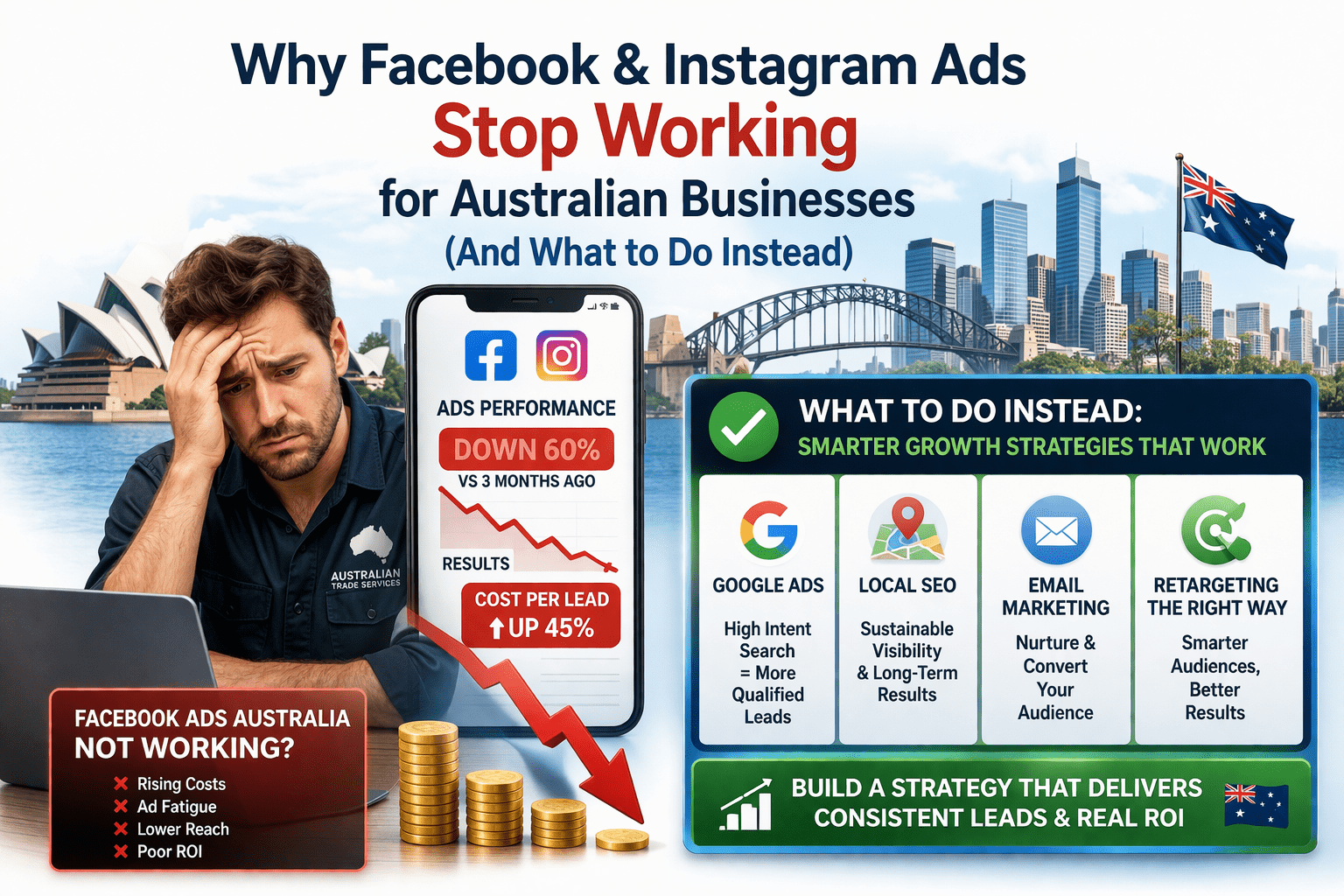
Let’s be honest—a lot of businesses across Australia are burning through cash on ads without seeing real results. You might have tried running Google Ads Australia campaigns or investing in small business ads Australia, only to feel like the money disappears faster than it comes back. And you’re not alone. We’ve seen this pattern again and again: businesses chase quick wins through paid ads, expecting instant leads, but end up stuck in a cycle of spending more just to maintain the same level of visibility.
The issue isn’t that advertising doesn’t work. It’s that relying only on ads creates a fragile system. The moment you stop paying, your visibility vanishes. That’s a risky game, especially for small businesses trying to grow sustainably. Think of it like renting a house—you’re paying constantly, but you never actually own anything. Local SEO, on the other hand, is more like building your own property over time.
In Australia, where local competition is often tight and customers rely heavily on mobile searches, Google Maps has become one of the most powerful tools for attracting ready-to-buy customers. Yet many businesses overlook it completely or treat it as an afterthought. That’s where the real opportunity lies. Instead of pouring more budget into ads that may or may not convert, smart businesses are shifting focus toward long-term visibility through Google Maps rankings.
The truth is simple: if your business isn’t showing up when someone nearby searches for your service, you’re missing out on high-intent customers. And those are the easiest customers to convert.
The Common Problem with Google Ads Australia
When businesses first try Google Ads Australia, it feels promising. You set a budget, choose a few keywords, and expect leads to start flowing in. But what actually happens? Costs per click rise quickly, competition gets fierce, and suddenly you’re paying a premium just to stay visible. For many industries, especially local services, those clicks don’t always turn into paying customers.
One of the biggest issues is targeting. Ads can bring traffic, but not always the right traffic. You might get clicks from people outside your service area or from users who are just browsing, not ready to commit. That means wasted spend. And over time, this adds up significantly.
Another problem is sustainability. Ads require constant funding. The moment you pause your campaign, your leads dry up. There’s no long-term asset being built. Compare that with Google Maps visibility—once you rank well, you can receive consistent traffic without paying for every click.
We’ve worked with businesses that spent thousands on ads with minimal return, only to see better results after shifting focus to local SEO. It’s not magic—it’s just aligning with how people actually search today.
Why Small Business Ads Australia Often Fail
For small businesses, the stakes are even higher. Budgets are tighter, and every dollar counts. Investing in small business ads Australia without a clear strategy often leads to frustration. Many owners assume ads will solve their visibility problem, but ads alone can’t fix weak positioning or poor local presence.
A common mistake is ignoring the customer journey. Someone searching on Google Maps is often closer to making a decision than someone clicking on a generic ad. They’re looking for directions, reviews, or quick contact details. That’s high intent. Ads, on the other hand, often interrupt rather than match intent.
There’s also the issue of trust. When users see a business listed organically on Google Maps with strong reviews, it feels more credible than a sponsored ad. People trust what others say more than what businesses pay to promote.
This is why shifting focus toward Google Maps SEO isn’t just a trend—it’s a smarter, more cost-effective way to grow. Instead of constantly feeding ad platforms, you’re building a presence that attracts customers naturally.
What Is Google Maps SEO and Why It Matters
If you’ve ever searched for a service like “plumber near me” or “best café in Sydney,” you’ve already seen Google Maps SEO in action. That little map section with business listings at the top of search results? That’s prime digital real estate. And in Australia, where mobile usage dominates and people rely heavily on quick local searches, showing up there can mean the difference between a steady stream of customers and being completely overlooked.
Google Maps SEO is all about optimising your business so it appears in those local search results. Unlike traditional SEO, which can take time to build authority across the web, local SEO focuses on proximity, relevance, and trust. It’s about making sure that when someone nearby is actively searching for what you offer, your business is front and centre.
What makes this powerful is intent. People using Google Maps aren’t casually browsing—they’re usually ready to take action. They want to call, visit, or book something right away. That’s a completely different level of engagement compared to someone clicking on a display ad or scrolling through social media.
We’ve seen businesses shift from relying heavily on google ads australia campaigns to investing in local SEO, and the results are often more stable and predictable. Instead of chasing clicks, they start attracting customers who are already looking for them. It’s like switching from shouting in a crowded room to having people walk directly up to you and ask for your service.
And here’s the kicker: once your Google Maps presence is properly optimised, it keeps working for you around the clock. No daily ad spend. No constant tweaking just to stay visible. It becomes a long-term asset that grows stronger over time.
How Local Search Behaviour Works in Australia
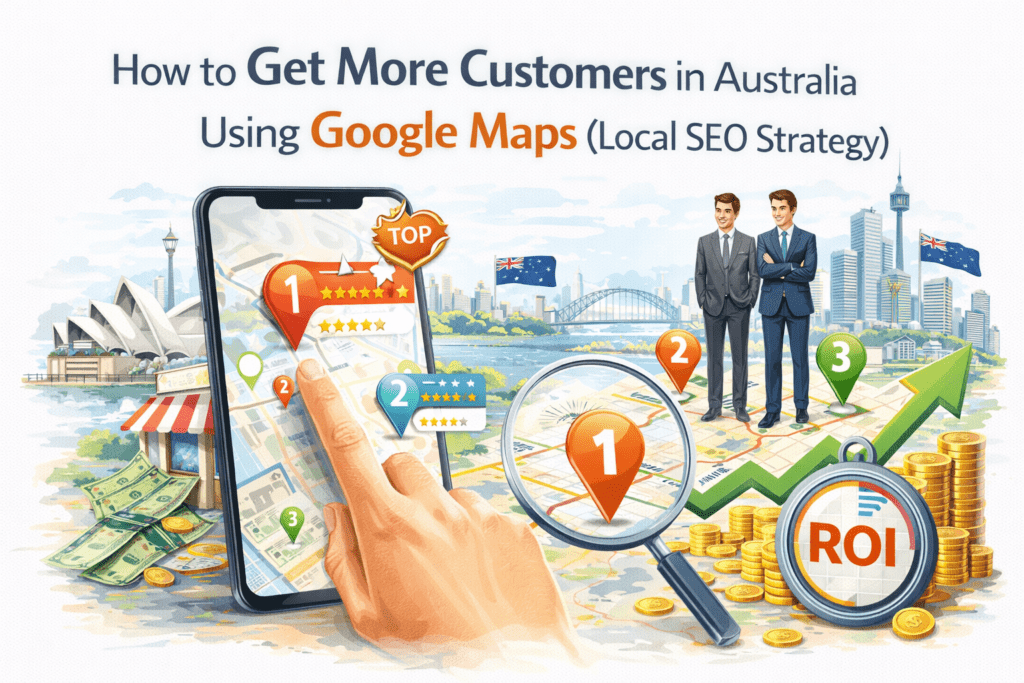
Australian consumers have developed a strong habit of using their phones to find local businesses instantly. Whether it’s tradies, restaurants, clinics, or retail stores, most people don’t go past the first few results they see. In fact, a large percentage of users will choose from the top three listings on Google Maps without even scrolling further.
This behaviour creates a huge opportunity—but also intense competition. If your business isn’t in that top group, you’re practically invisible. And that’s where many businesses struggle. They invest in small business ads australia, hoping to compensate for poor visibility, but ignore the underlying issue: they’re not optimised for local search.
Another key factor is trust. Aussies tend to rely heavily on reviews and ratings before making decisions. A business with dozens of positive reviews and active engagement stands out immediately. It sends a clear signal: “This place is reliable.”
Location also plays a big role. Google prioritises businesses that are close to the searcher, but proximity alone isn’t enough. If your competitors have stronger optimisation and better reviews, they can still outrank you—even if they’re slightly further away.
Understanding this behaviour is crucial. It’s not just about being online—it’s about being visible at the exact moment someone is ready to act.
The Power of “Near Me” Searches
“Near me” searches have exploded in popularity, and they’re one of the biggest drivers of local business growth in Australia. When someone types “electrician near me” or “hairdresser near me,” they’re not researching—they’re deciding. These searches are high-intent, fast-moving, and incredibly valuable.
What’s interesting is that Google doesn’t just look at the words “near me.” It automatically understands location intent, even if the user doesn’t include those words. That means your business needs to be optimised for local relevance at all times, not just for specific keywords.
This is where many ad campaigns fall short. Google ads australia can target keywords, but they can’t fully replicate the trust and visibility of a strong Google Maps presence. Ads might get you seen, but Maps gets you chosen.
Think of it like this: ads are like billboards on a highway—you hope the right person sees them. Google Maps, on the other hand, is like a recommendation from a local guide who already knows what the person needs.
Businesses that understand this shift are the ones pulling ahead. They’re not abandoning ads completely—they’re just using them smarter, while building a solid foundation through local SEO.
How Google Maps Ranking Actually Works
Getting onto Google Maps is easy. Ranking at the top? That’s where strategy comes in. Google uses a combination of factors to decide which businesses appear first, and understanding these can completely change how you approach your marketing.
At its core, Google Maps ranking is based on three main elements: relevance, distance, and prominence. These might sound simple, but each one involves multiple layers of optimisation.
Relevance is about how well your business matches what someone is searching for. This includes your business category, description, and the keywords used in your profile. Distance is self-explanatory—it considers how close your business is to the user. But prominence is where things get interesting. This includes your reviews, ratings, online presence, and overall authority.
Many businesses focus too much on one factor and ignore the others. For example, they might be in a great location but have poor reviews, or they might have strong branding but weak keyword optimisation. To rank well, you need a balanced approach.
The good news? Unlike paid ads, where visibility depends on budget, Google Maps rewards consistency and quality. That means even small businesses can compete with larger ones if they optimise properly.
Relevance, Distance, and Prominence Explained
Let’s break it down in a practical way. Imagine someone in Melbourne searching for a “local electrician.” Google will first look for businesses that clearly offer electrical services—that’s relevance. Then it considers how close those businesses are to the searcher—that’s distance. Finally, it evaluates which businesses are most trusted and well-known—that’s prominence.
Prominence is often the deciding factor. Two businesses might be equally close and relevant, but the one with better reviews, more activity, and stronger online signals will usually rank higher.
This is why simply creating a Google Business profile isn’t enough. You need to actively manage and improve it. Add photos, update information, post regularly, and engage with reviews. All of these actions signal to Google that your business is active and trustworthy.
We’ve seen businesses transform their rankings just by improving these fundamentals. No extra ad spend—just smarter optimisation.
Why Reviews Are a Game-Changer
If there’s one factor you shouldn’t ignore, it’s reviews. They’re not just important—they’re critical. Reviews influence both your ranking and your conversion rate. In other words, they help people find you and convince them to choose you.
A business with a high rating and plenty of positive reviews instantly stands out. It creates confidence. On the flip side, a business with few or negative reviews struggles to attract attention, no matter how good their service actually is.
Encouraging customers to leave reviews should be part of your regular process. It doesn’t have to be complicated—just ask at the right moment, like after a successful job or positive interaction.
Responding to reviews is equally important. It shows that you care about feedback and are actively engaged with your customers. Even responding to negative reviews in a professional way can boost your credibility.
This is one area where many businesses fall short, especially those focused only on small business ads australia. They spend money to get attention but neglect the reputation that actually converts that attention into sales.
Step-by-Step Local SEO Strategy for Google Maps
If you’re serious about getting more customers without constantly draining your budget, you need a clear and structured approach. Google Maps SEO isn’t about quick hacks—it’s about building a strong local presence step by step. The good news? Once you get the fundamentals right, everything starts to compound. Visibility improves, trust grows, and leads become more consistent.
We approach this like building a house. You don’t start with decorations—you start with the foundation. And in local SEO, that foundation is your business data, your profile optimisation, and your consistency across the web. Skip any of these, and your results will always feel unstable.
Let’s break it down into practical actions you can actually implement.
Optimising Your Google Business Profile
Your Google Business Profile is the heart of your local SEO strategy. It’s the first thing people see when your business appears on Google Maps, and it directly influences both ranking and conversions. Yet, many businesses treat it like a one-time setup instead of an ongoing asset.
Start with accuracy. Your business name, address, and phone number must be correct and consistent everywhere online. Even small inconsistencies can confuse Google and hurt your rankings. Then move on to categories—choose the most relevant primary category and add secondary ones where appropriate. This helps Google understand exactly what you offer.
Your description should naturally include your main services and location-based keywords, but keep it readable. Don’t stuff it with keywords. Think of it as your elevator pitch—clear, simple, and convincing.
Photos are another powerful factor. Businesses with high-quality, regularly updated photos tend to perform better. Show your work, your team, your location—make it feel real. People trust what they can see.
And here’s something often overlooked: regular updates. Posting updates, offers, or news on your profile signals activity. Google prefers active businesses because they’re more likely to provide a good user experience.
Local Keywords That Drive Real Customers
Keywords are where many businesses go wrong. They either target overly broad terms or focus only on what they think people search for. But local SEO requires a different mindset. You need to think like your customer.
Instead of just targeting “plumber,” you should be targeting phrases like “emergency plumber in Brisbane” or “blocked drain service near me.” These are high-intent keywords—they come from people who need help עכשיו, not later.
This is where google ads australia can actually help—by giving you insight into which keywords convert. But instead of relying only on ads, you take that data and apply it to your organic strategy. That way, you’re not paying for every click—you’re building long-term visibility.
Your keywords should appear naturally in your business description, services, posts, and even in customer reviews. Yes, reviews matter here too. When customers mention specific services and locations, it reinforces your relevance in Google’s eyes.
The goal isn’t to rank for everything. It’s to rank for the right things—the searches that actually bring in paying customers.
Consistent Business Information Across the Web
Consistency might sound boring, but it’s one of the most powerful ranking factors. Google cross-checks your business information across multiple sources—directories, websites, social platforms—and if something doesn’t match, it creates uncertainty.
Think of it like references on a resume. If every reference says something slightly different, it raises doubts. But if everything aligns perfectly, it builds trust.
Make sure your name, address, and phone number (NAP) are identical everywhere. That includes formatting—small differences like “St” vs “Street” can matter more than you’d expect.
Also, list your business on relevant Australian directories and local platforms. These listings act like signals that confirm your legitimacy and location.
This step doesn’t bring instant results, but it strengthens your entire SEO foundation. Over time, it helps push your business higher in Google Maps rankings—without spending more on small business ads australia.
Content That Boosts Your Local Visibility
Content isn’t just for blogs or websites—it plays a major role in local SEO too. The more relevant and useful content you create, the more signals you send to Google about what your business does and who it serves.
But here’s the key: your content needs to be locally focused. Generic content won’t move the needle. You need to connect your services with your location in a way that feels natural and helpful.
Posting Updates on Google Business
Most businesses ignore this feature, which is a huge missed opportunity. Posting updates on your Google Business Profile is like having a mini social media platform built directly into search results.
You can share:
- Promotions or special offers
- Updates about your services
- Seasonal tips or advice
- News related to your business
Each post adds fresh content to your profile, which signals activity to Google. And remember—Google loves active businesses.
But it’s not just about rankings. These posts also influence customer decisions. When someone sees a business that regularly updates its profile, it feels more trustworthy and engaged.
Local Landing Pages That Convert
If you serve multiple areas, creating location-specific landing pages can significantly boost your visibility. Instead of having one generic page, you create dedicated pages for each area you serve.
For example, instead of just “Plumbing Services,” you might have pages like “Plumbing Services in Perth” or “Emergency Plumber in Adelaide.” Each page should include relevant keywords, local references, and useful information tailored to that area.
This strategy helps you appear in more local searches while also improving your website’s overall SEO.
It’s a bit more work upfront, but the payoff is worth it. You’re essentially expanding your digital footprint without increasing your ad spend.
Reviews, Reputation, and Trust Signals
In local SEO, reputation isn’t just important—it’s everything. You can have perfect optimisation, strong keywords, and consistent data, but if your reviews are weak, your results will always suffer.
People trust people. That’s why reviews play such a huge role in both rankings and conversions.
How to Get More 5-Star Reviews
The easiest way to get reviews is simply to ask—but timing matters. Ask when the customer is happiest, right after a successful interaction.
Make it easy. Send a direct link, keep the process simple, and don’t overcomplicate it. The more friction you remove, the more likely people are to follow through.
Consistency is key. One or two reviews won’t make a big difference, but a steady flow over time will.
Responding to Reviews the Right Way
Responding to reviews shows that you care. It also builds trust with potential customers who are reading those interactions.
Thank customers for positive feedback, and handle negative reviews professionally. Don’t get defensive—focus on resolving the issue and showing accountability.
This level of engagement can set you apart from competitors who ignore their reviews entirely.
Common Mistakes That Kill Your Results
Even with the best intentions, many Australian businesses sabotage their own growth without realising it. They invest time, money, and effort—but still don’t see results. Why? Because a few critical mistakes quietly undermine everything else they’re doing.
One of the biggest issues we see is inconsistency. Businesses might optimise their Google Business Profile once and then forget about it. No updates, no new photos, no engagement. Over time, that profile becomes stale, and Google starts favouring more active competitors. Local SEO isn’t a “set and forget” system—it’s something you maintain and improve continuously.
Another common mistake is chasing shortcuts. Some businesses try to game the system with spammy tactics like keyword stuffing or fake reviews. Not only do these strategies fail long-term, but they can also lead to penalties. Google’s algorithm is smarter than ever, and it rewards authenticity, not manipulation.
There’s also a misunderstanding of how visibility works. Many assume that being “online” is enough. But in reality, if you’re not showing up in the top local results, you’re effectively invisible. Customers rarely scroll—they choose from what they see first.
And then there’s the biggest trap of all: relying entirely on paid ads.
Over-reliance on Paid Ads
It’s easy to fall into the trap of thinking more budget equals more customers. With google ads australia, you can increase visibility almost instantly—but that visibility comes at a cost. And the moment you stop paying, it disappears.
We’ve worked with businesses that were spending heavily on ads just to maintain a steady flow of leads. But when we looked closer, the problem wasn’t traffic—it was dependency. They had no organic presence to support their growth.
Paid ads should support your strategy, not carry it بالكامل. If your entire lead generation depends on ads, you’re always one budget cut away from losing momentum.
That’s why combining ads with local SEO is so powerful. Ads can bring quick wins, while Google Maps builds long-term stability. Together, they create a balanced system—but relying on ads alone is like running on a treadmill. You’re moving, but not really getting anywhere.
Ignoring Local SEO Signals
Another major mistake is ignoring the small details that actually drive rankings. Things like consistent business information, regular updates, review responses, and local content might seem minor—but together, they create a strong signal to Google.
Think of it like fitness. One workout won’t change much, but consistent effort over time delivers real results. Local SEO works the same way.
Businesses that ignore these signals often try to compensate by increasing their small business ads australia budget. But more spending doesn’t fix weak foundations—it just masks the problem temporarily.
The businesses that succeed are the ones that focus on both visibility and credibility. They don’t just want to be seen—they want to be chosen.
When to Combine Google Ads with Local SEO
Let’s be clear—this isn’t about choosing between ads and SEO. The real power comes from using both strategically. The difference is how you use them.
Ads are great for speed. SEO is great for sustainability.
When you combine them правильно, you create a system that delivers both short-term and long-term results.
Smart Budget Allocation
Instead of pouring your entire budget into ads, allocate a portion toward building your local SEO presence. This might include optimising your Google Business Profile, creating local content, and improving your review strategy.
Use ads to target high-intent keywords and test what works. Then take that data and apply it to your organic strategy. Over time, you’ll start ranking for those same keywords without paying for every click.
This approach reduces your cost per lead and increases your return on investment.
Scaling Without Wasting Money
As your Google Maps visibility improves, you’ll notice something interesting—your reliance on ads decreases. You don’t need to spend as much to maintain the same level of leads.
This is where real growth happens. You’re no longer stuck in a cycle of constant spending. Instead, you’re building a system that scales efficiently.
We’ve seen businesses completely transform their marketing this way. By shifting focus from short-term wins to long-term strategy, they not only reduced costs but also increased the quality of their leads.
How Kokhan Marketing Company Helps Businesses Grow
At this point, you might be thinking, “This all makes sense—but it’s a lot to manage.” And you’re right. Local SEO requires time, consistency, and a clear strategy.
That’s where working with the right partner can make all the difference.
At Kokhan Marketing Company (https://kokhan-marketing.com/), we focus on helping Australian businesses move away from wasted ad spend and toward sustainable growth. Instead of chasing quick wins, we build systems that actually work long-term.
We don’t just optimise profiles—we develop complete local SEO strategies tailored to your business and location. From improving your Google Maps rankings to strengthening your online reputation, every step is designed to bring in real customers, not just clicks.
And yes, if you’re already running google ads australia, we help align those campaigns with your SEO strategy so they support each other instead of competing for budget.
The goal is simple: more visibility, better leads, and smarter spending.
Conclusion
Getting more customers in Australia doesn’t have to mean spending more on ads. In fact, if you rely only on ads, you’re likely leaving money on the table.
Google Maps offers something far more valuable—consistent, high-intent traffic from people who are ready to take action. By focusing on local SEO, you’re not just increasing visibility—you’re building trust, credibility, and long-term growth.
The shift is simple but powerful. Instead of chasing customers, you position your business so customers come to you.
And once that starts happening, everything changes.