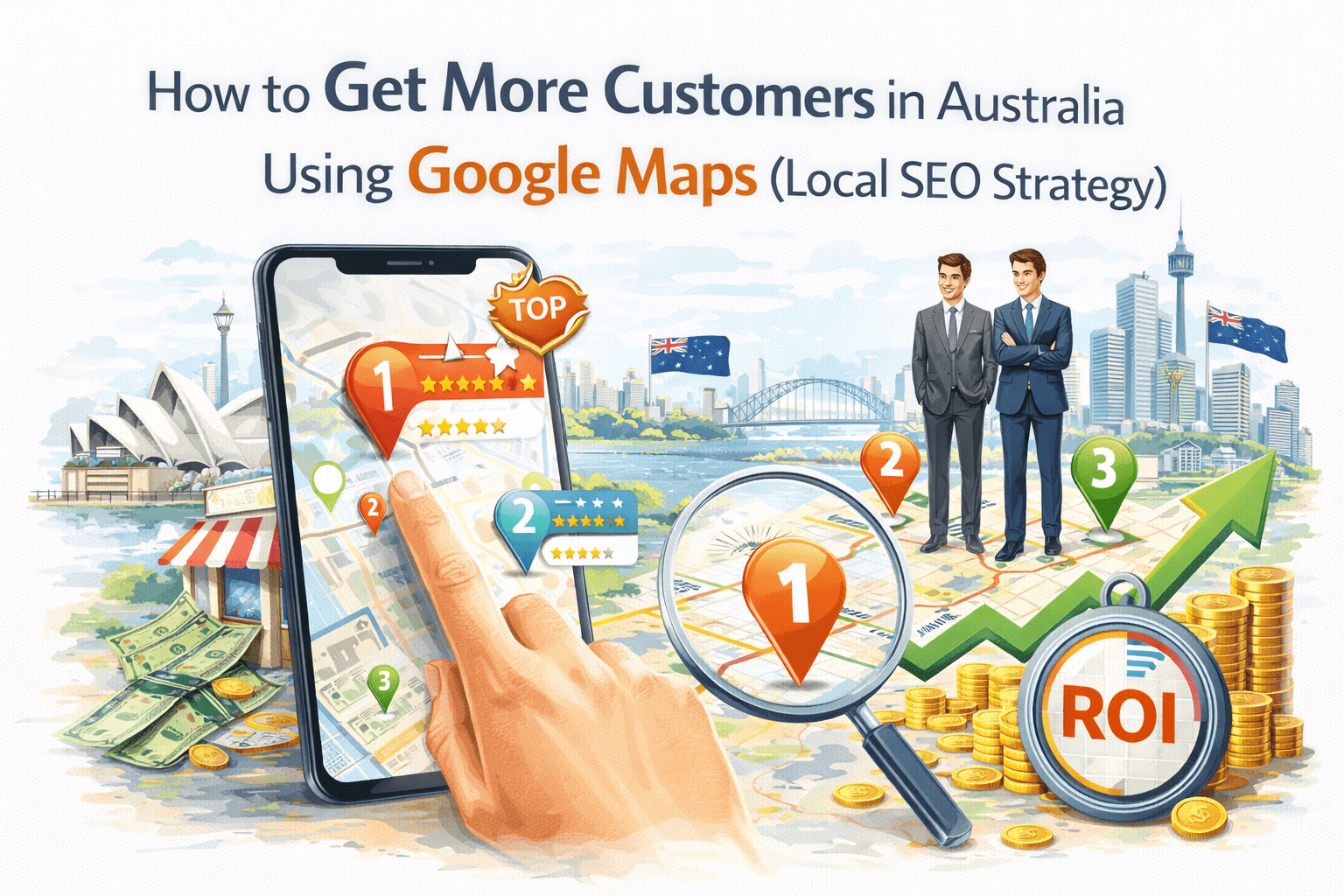
Why Local SEO Matters More Than Ever in Australia
The Shift to Local Search Behaviour
If you’re running a business in Australia right now, there’s one thing you can’t ignore—people search locally for almost everything. Whether it’s a tradie, café, dentist, or marketing service, users are typing queries like “near me” or adding city names more than ever before. This shift isn’t just a trend—it’s become the default behaviour.
We’ve noticed that local intent has exploded over the last few years. People don’t want generic results; they want fast, relevant answers close to them. And Google has adapted accordingly. When someone searches for a service, they’re no longer just seeing websites—they’re seeing maps, reviews, and local listings front and centre.
For small businesses, this creates a massive opportunity—but also serious competition. If you’re not optimised for local SEO Australia, you’re essentially invisible to a huge portion of your audience. It doesn’t matter how good your service is if no one can find you online.
Another key factor is mobile usage. Most local searches happen on phones, often when users are ready to take action. That means your visibility directly impacts real-world results—calls, bookings, and foot traffic.
How Google Prioritises Local Results
Google’s algorithm has become incredibly sophisticated when it comes to local search. It doesn’t just look at keywords anymore—it evaluates relevance, distance, and prominence. These three pillars determine whether your business shows up in local results.
Relevance is about how well your business matches the search query. Distance considers how close you are to the user. Prominence is where things get interesting—it includes reviews, backlinks, and your overall online presence.
This means that even if your business is slightly further away, you can still outrank competitors by building stronger authority. That’s where strategy comes in.
We’ve worked with businesses that were struggling to appear in their own suburbs. After refining their local signals, they started ranking not just in their area, but across multiple nearby locations. That’s the power of doing local SEO Australia the right way.
Understanding How Local SEO Works in 2026
Key Ranking Factors You Need to Know
Local SEO in 2026 isn’t about gaming the system—it’s about aligning with how search engines understand businesses. The core ranking factors remain consistent, but the way they’re evaluated has evolved.
The most important factors include:
- Google Business Profile optimisation
- Consistent business information (NAP: Name, Address, Phone)
- High-quality local backlinks
- Positive customer reviews
- On-page local relevance
Each of these elements sends signals to Google about your credibility and relevance. When combined, they create a strong foundation for ranking.
One thing we always emphasise is consistency. If your business details are different across platforms, it confuses search engines and weakens your authority. It might seem like a small detail, but it has a big impact.
The Role of AI and Search Intent
Search has become smarter, largely due to AI. Google now understands context, intent, and user behaviour better than ever. This means keyword stuffing or outdated tactics simply don’t work anymore.
Instead, your content needs to genuinely answer user questions. If someone searches for “best electrician in Melbourne,” Google looks for businesses that not only match the keyword but also demonstrate trust, expertise, and relevance.
We approach SEO with this mindset—focus on the user first, and rankings follow. It’s not about tricking the algorithm; it’s about working with it.
Optimising Your Google Business Profile
Setting Up for Maximum Visibility
Your Google Business Profile is one of the most powerful tools in local SEO Australia—yet many businesses either neglect it or set it up incorrectly. Think of it as your digital storefront. It’s often the first thing potential customers see.
A fully optimised profile includes accurate business details, high-quality images, service descriptions, and regular updates. The more complete your profile, the more trust you build with both users and Google.
Posting updates, offers, and news also signals activity. An active profile is more likely to rank higher than one that’s been sitting idle.
How Reviews Impact Rankings
Reviews are a major ranking factor—and they influence customer decisions just as much. Positive reviews build trust, while consistent feedback signals credibility.
Encouraging happy customers to leave reviews should be part of your strategy. But it’s not just about quantity—quality and responses matter too. Engaging with reviews shows that you care about your customers.
We’ve seen businesses dramatically improve their visibility simply by focusing on reviews. It’s one of the simplest yet most effective tactics available.
Targeting the Right Local Keywords
Finding City-Based Search Terms
Choosing the right keywords is the backbone of any successful local SEO Australia strategy. It’s not just about what you offer—it’s about how people search for it in your specific area.
Start with core services and combine them with location modifiers. For example, instead of just “plumber,” think “plumber in Perth” or “emergency plumber Brisbane.” These keywords reflect real user behaviour.
Keyword research tools can help, but you should also think like your customer. What would you type into Google if you needed your service?
Long-Tail Keywords That Convert
Long-tail keywords might have lower search volume, but they often have higher intent. These are more specific queries that indicate a user is ready to take action.
Examples include:
- “Affordable electrician in Sydney CBD”
- “24/7 locksmith Melbourne”
Targeting these keywords can lead to better conversion rates and less competition.
On-Page SEO for Local Businesses
Creating Location-Specific Pages
One of the most effective ways to improve your local SEO Australia performance is by creating dedicated pages for each location you serve. Yet, many businesses either skip this step entirely or try to rank multiple cities with a single generic page. That approach rarely works in 2026.
Search engines are now much better at identifying whether your content is genuinely relevant to a specific area. If you want to rank in Sydney, Melbourne, or Brisbane, you need pages that clearly target those locations. That means more than just adding a city name—it’s about building content that reflects real local relevance.
We usually recommend creating structured location pages that include specific details such as services offered in that area, customer testimonials from local clients, and even references to suburbs or landmarks. This signals authenticity to both users and search engines.
Think of it this way: if someone lands on your page, they should immediately feel like your business operates in their area. If the content feels generic, trust drops—and so do your rankings.
Optimising Content for Local Intent
Optimising content for local intent goes beyond keywords. It’s about aligning your messaging with what people in your area are actually looking for. For example, someone searching in Australia might use different phrasing compared to other countries, and your content should reflect that naturally.
We focus on writing content that answers real questions. What problems do your local customers face? What solutions are they searching for? When your content addresses these points clearly, it becomes far more effective.
Another key element is internal linking. Connecting your location pages to relevant services helps search engines understand your site structure. It also improves user experience by making navigation easier.
Strong on-page SEO is like laying a solid foundation. Without it, even the best external strategies won’t deliver consistent results.
Building Local Authority with Backlinks
Where to Get Quality Local Links
Backlinks remain one of the strongest ranking factors in local SEO Australia, but not all links are created equal. In fact, low-quality or spammy links can do more harm than good. The goal is to build authority through relevant, local sources.
Some of the most valuable backlinks come from:
- Local business directories
- Industry-specific websites
- Community organisations
- Local news or blogs
These links signal to Google that your business is part of a real, trusted network within your area. It’s not just about quantity—it’s about relevance and credibility.
We often tell businesses to think of backlinks as recommendations. If respected local sources are linking to you, it builds trust in your brand. And that trust translates into higher rankings.
Avoiding Spammy Link Building
It’s tempting to look for shortcuts, especially when you’re trying to grow quickly. But buying cheap backlinks or using automated tools is a risky move. Google’s algorithm is smart enough to detect unnatural patterns, and penalties can be difficult to recover from.
Instead, focus on sustainable strategies. Build relationships, create valuable content, and earn links naturally. It might take more time, but the results are far more stable.
Businesses that work with experienced teams like Kokhan Marketing Company often avoid these pitfalls entirely. With the right approach, link building becomes a long-term asset rather than a short-term gamble.
Technical SEO for Local Rankings
Mobile Optimisation and Speed
In Australia, the majority of local searches happen on mobile devices. If your website isn’t optimised for mobile, you’re already at a disadvantage. Users expect fast, seamless experiences—and if your site doesn’t deliver, they’ll leave within seconds.
Page speed is a critical factor here. Even a one-second delay can significantly impact conversion rates. Google also considers speed as a ranking signal, which means a slow website hurts both your visibility and your results.
We always recommend testing your site regularly. Look at load times, responsiveness, and overall usability. Small improvements can make a big difference.
Structured Data for Local Businesses
Structured data might sound technical, but it plays a powerful role in helping search engines understand your business. By adding schema markup, you provide clear information about your services, location, and contact details.
This can enhance your search listings with additional information, making them more attractive and clickable. It also improves your chances of appearing in rich results.
While it requires some setup, the benefits are well worth it. Technical SEO often works behind the scenes, but its impact is very real.
Content Marketing for Local Visibility
Blogging for Your Local Audience
Content marketing is one of the most underrated strategies in local SEO Australia. Many businesses focus only on service pages and ignore the power of informative content. But blogging allows you to target a wider range of keywords and attract potential customers at different stages of their journey.
For example, a local business could write articles answering common questions related to their services. This not only improves visibility but also builds trust with your audience.
We approach content as a way to educate and engage. When users find helpful information on your site, they’re more likely to choose your business when they’re ready to take action.
Using Local Topics to Drive Traffic
Local content performs especially well because it connects directly with your audience. Writing about community events, local tips, or area-specific guides can attract highly relevant traffic.
It also strengthens your local relevance. When your content consistently references your city or region, it reinforces your presence in that area.
Over time, this creates a strong content ecosystem that supports your overall SEO strategy.
Common Local SEO Mistakes in Australia
Inconsistent Business Information
One of the most common issues we see is inconsistent business information across different platforms. Your name, address, and phone number should be identical everywhere—your website, directories, and social profiles.
Even small differences can confuse search engines and weaken your authority. It might seem minor, but it has a significant impact on rankings.
Ignoring Analytics and Data
Another major mistake is not tracking performance. Without data, you have no way of knowing what’s working. Analytics tools provide valuable insights into traffic, user behaviour, and conversions.
We always emphasise the importance of reviewing this data regularly. It allows you to make informed decisions and continuously improve your strategy.
How to Build a Winning Local SEO Strategy
Step-by-Step Approach to Ranking
A successful local SEO Australia strategy isn’t built overnight—it’s the result of consistent effort and smart planning. The first step is understanding your market and competition. What are other businesses in your area doing? Where are the gaps you can take advantage of?
From there, focus on the fundamentals: optimise your Google Business Profile, target the right keywords, and ensure your website is fully optimised. These core elements create a strong base.
Next, build authority through backlinks and content. This is where long-term growth happens. The more relevant signals you send to Google, the stronger your position becomes.
Finally, monitor and refine. SEO is not static—it evolves. Regular updates and improvements keep you ahead of the competition.
When to Work with Experts
At some point, managing everything yourself can become overwhelming. SEO requires time, technical knowledge, and ongoing effort. That’s why many businesses choose to work with professionals.
We’ve seen firsthand how the right strategy can transform a business’s online presence. Partnering with experienced teams like Kokhan Marketing Company helps you avoid common mistakes and accelerate your results.
It’s not just about ranking higher—it’s about building a sustainable system that consistently brings in leads and customers.
Conclusion
Local SEO in Australia has become more competitive, but also more rewarding for businesses that approach it strategically. From optimising your website to building authority and creating valuable content, every element plays a role in your success.
The key is consistency. Small improvements over time lead to significant results. When you align your strategy with how search engines and users actually behave, rankings follow naturally.
In 2026, businesses that invest in local SEO Australia aren’t just improving visibility—they’re building long-term growth.