The Click-Conversion Gap Explained
What Clicks Actually Mean
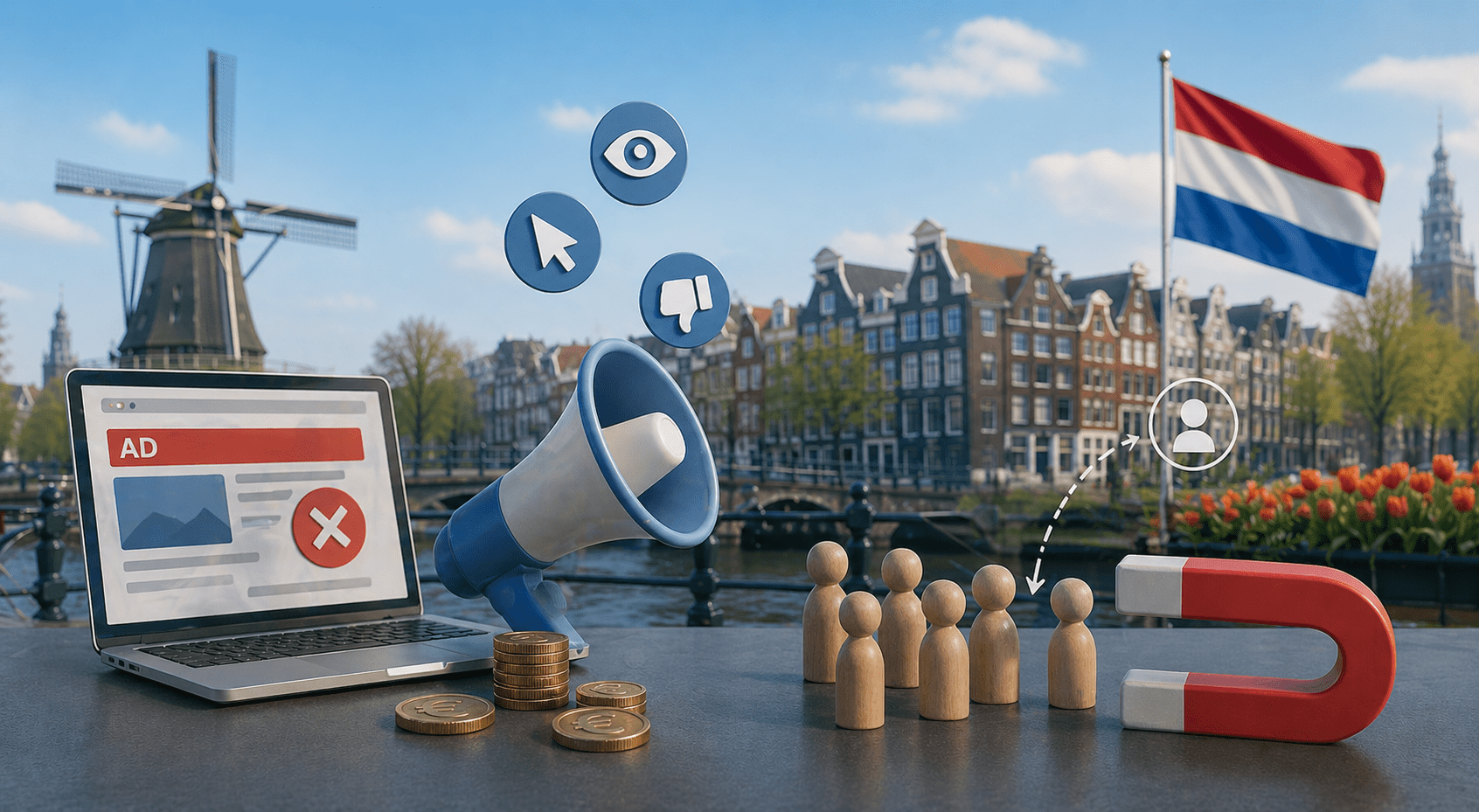
Let’s be real for a second—getting clicks feels good. You launch an ad, numbers start ticking up, and suddenly it looks like your campaign is working. But here’s the uncomfortable truth: clicks don’t pay the bills. They’re just curiosity in motion. Someone saw your ad, found it interesting enough to tap or click, and that’s it. No commitment, no guarantee, no money exchanged. It’s like people walking into a store just to browse and then leaving without buying anything.
Clicks are often driven by surface-level appeal—catchy headlines, bold visuals, or even curiosity bait. You might be pulling people in with something flashy, but if that initial promise doesn’t match what comes next, they’re gone in seconds. And that’s where most advertisers get stuck. They confuse attention with intent.
Think of it like fishing. A click is a nibble, not a catch. If your bait is wrong, or your hook isn’t set properly, you’re not bringing anything home. So while high click-through rates (CTR) can look impressive in reports, they don’t necessarily mean your ad is doing its real job—driving conversions.
The key takeaway here? Clicks are just the first step in a much longer journey. If you’re only optimizing for them, you’re playing a shallow game. Real success comes from understanding what happens after the click—and why people decide not to take the next step.
Why Conversions Are a Different Game
Conversions are where things get serious. Unlike clicks, which are often impulsive, conversions require trust, clarity, and motivation. A user needs to feel confident enough to take action—whether that’s making a purchase, signing up, or booking a call. That’s a much higher bar than simply clicking a button.
Here’s the thing: conversions involve friction. People hesitate. They overthink. They compare options. And if anything feels off—even slightly—they bounce. That means every part of your funnel needs to work together seamlessly. Your ad, your landing page, your offer, your credibility—it all has to align.
A lot of advertisers underestimate how complex this step is. They assume that if people are clicking, they must be interested enough to convert. But interest doesn’t equal intent. Someone might click because your ad was intriguing, not because they’re ready to buy.
Also, let’s not ignore timing. Not everyone who clicks is in buying mode. Some are just researching, others are bored, and a few might even click by accident. That’s why conversion optimization is less about attracting more people and more about attracting the right people—and giving them exactly what they need to take action.
If you’re stuck in the “lots of clicks, no deals” phase, it’s not bad luck. It’s a signal. Something in your funnel is misaligned. And once you start digging into it, the patterns become pretty obvious.
Wrong Audience, Right Ad
Targeting Too Broad
One of the most common mistakes? Trying to reach everyone. It sounds logical—more people equals more chances to convert, right? Not exactly. When your targeting is too broad, you end up attracting a mixed crowd, many of whom were never going to buy in the first place.
Ad platforms make it ridiculously easy to expand your reach. With just a few clicks, you can target millions of users. But scale without precision is just noise. If your message isn’t tailored to a specific audience, it becomes generic—and generic doesn’t convert.
Imagine you’re selling premium fitness coaching. If your ad is shown to people who casually scroll fitness content versus those actively searching for a coach, you’ll get very different results. The first group might click out of curiosity. The second group is far more likely to convert.
Broad targeting also confuses your messaging. When you try to speak to everyone, you end up resonating with no one. Strong ads feel personal. They speak directly to a specific problem, in a specific context, for a specific type of person.
So if your ads are getting clicks but no deals, take a hard look at your audience settings. Are you targeting based on real buyer intent, or just general interests? Narrowing your audience might reduce clicks—but it will dramatically improve the quality of those clicks.
Attracting the Wrong Intent
Not all clicks are created equal. Some come from people ready to act. Others come from people who are just curious, distracted, or even confused. If your ad is attracting the wrong intent, you’ll see exactly what you’re experiencing—traffic without results.
This often happens when your messaging is misleading, even unintentionally. For example, if your ad promises something “free” but leads to a paid offer, people will click—but they won’t convert. The same goes for vague or overly hyped claims. You might win the click, but you lose trust immediately after.
Intent is everything. Someone searching “best CRM for small business” is in a completely different mindset than someone scrolling past a generic “boost your sales today” ad. One is actively looking for a solution. The other is passively consuming content.
The fix? Align your ad message with real buyer intent. Be clear about what you’re offering. Qualify your audience through your copy. It might feel like you’re turning people away, but in reality, you’re filtering out the wrong ones—and that’s exactly what you want.
Your Offer Isn’t Strong Enough
Weak Value Proposition
Here’s where things start to get brutally honest—sometimes your ads are doing their job perfectly… but your offer just isn’t compelling enough to close the deal. You can drive all the traffic in the world, but if people land on your page and think, “Meh, I’ve seen better,” you’ve already lost them.
A value proposition isn’t just a fancy marketing phrase—it’s the core reason someone should choose you over every other option out there. And in today’s crowded digital space, “good enough” doesn’t cut it anymore. People are comparing you to competitors, alternatives, and even doing nothing at all. If your offer doesn’t clearly answer “Why should I care?” within seconds, they’re gone.
Think about it like this: if your ad is the hook, your offer is the deal. And no one sticks around for a weak deal. Maybe your benefits are too vague. Maybe you’re focusing on features instead of real outcomes. Or maybe you’re not addressing a strong enough pain point. Whatever the case, the disconnect shows up as clicks without conversions.
Strong offers are crystal clear and outcome-driven. They speak directly to what the user wants to achieve or avoid. Instead of saying “We provide marketing solutions,” a stronger angle would be “Get 3x more qualified leads in 30 days without increasing your ad spend.” See the difference? One is generic. The other feels tangible and specific.
If you’re not getting deals, don’t just tweak your ads—rework your offer. Make it sharper, more relevant, and impossible to ignore.
No Urgency or Incentive
Even if your offer is solid, there’s another silent killer of conversions: lack of urgency. People procrastinate by default. They tell themselves they’ll come back later—and most never do. Without a reason to act now, your funnel becomes a waiting room that nobody returns to.
Urgency isn’t about manipulation; it’s about momentum. You’re helping users make a decision instead of delaying it. This could be a limited-time discount, a bonus that expires, or even limited availability. The key is making the opportunity feel time-sensitive and real.
Let’s say someone is interested in your product. They click, browse, maybe even like what they see. But then they think, “I’ll check this out later.” That’s the moment you lose them. A simple element like “Only 10 spots left this week” or “Offer ends tonight” can shift that hesitation into action.
Incentives also play a big role. People love feeling like they’re getting extra value. It doesn’t always have to be a discount—it could be a bonus, a free trial, or exclusive access. The goal is to make the deal feel like a no-brainer.
Without urgency or incentive, even interested users drift away. And when that happens at scale, it looks exactly like your situation: lots of clicks, zero deals.
Landing Page Disconnect
Message Mismatch
Imagine clicking on an ad that promises one thing… and landing on a page that talks about something slightly different. Feels off, right? That’s called message mismatch, and it’s one of the fastest ways to kill conversions.
Your ad sets an expectation. It tells the user what they’re about to get. If your landing page doesn’t immediately reinforce that message, trust starts to drop. Even small inconsistencies—like different wording, tone, or focus—can create doubt.
Let’s say your ad says, “Get a free website audit in 5 minutes,” but your landing page starts talking about full-service marketing packages. Now the user is confused. Are they in the right place? Is the free audit even real? That hesitation leads to one thing: bounce.
Consistency is everything. Your headline, visuals, and offer should feel like a seamless continuation of the ad. When users land on your page, they should instantly think, “Yep, this is exactly what I expected.”
This isn’t just about design—it’s about alignment. Every step of your funnel should feel like a natural progression, not a sudden shift. When that flow is broken, conversions drop fast.
Poor User Experience
Even if your messaging is perfect, a bad user experience can quietly sabotage everything. People have zero patience online. If your page loads slowly, looks cluttered, or is hard to navigate, they’re out—no second chances.
Speed is a big one. Studies consistently show that even a one-second delay in load time can significantly reduce conversions. People expect instant access, and if they don’t get it, they leave. Simple as that.
Then there’s design and clarity. If your page feels overwhelming—too much text, too many buttons, unclear structure—users don’t know what to do next. And when people are confused, they don’t convert.
Your landing page should guide users like a smooth path, not a maze. Clear headline, strong subheading, focused content, and one primary call-to-action. That’s it. No distractions.
Mobile experience matters too. A huge chunk of traffic comes from mobile devices, and if your page isn’t optimized for smaller screens, you’re losing deals without even realizing it.
At the end of the day, your landing page should make taking action feel effortless. If it feels like work, users won’t bother.
Trust Is Missing
Lack of Social Proof
People don’t just buy products—they buy confidence. And one of the fastest ways to build that confidence is through social proof. If your page lacks it, you’re asking users to take a leap of faith… and most won’t.
Think about your own behavior. When you’re unsure about something, what do you do? You check reviews, testimonials, ratings. You look for evidence that others have had a good experience. Your audience is doing the exact same thing.
If your landing page doesn’t show proof—real testimonials, case studies, user numbers, or recognizable brands—you’re leaving a big gap in your funnel. Users might be interested, but they’re not convinced.
Even simple additions can make a huge difference. A few authentic customer quotes, before-and-after results, or data-backed success stories can shift perception instantly. It’s no longer just your claim—it’s backed by real people.
Without social proof, your offer feels untested. And untested offers rarely convert.
Weak Branding Signals
Trust isn’t built on one element—it’s a combination of signals. Your branding plays a huge role in that. If your ads and landing page feel inconsistent, outdated, or unprofessional, users pick up on it immediately.
Branding isn’t just about logos and colors. It’s about the overall impression you create. Does your site look credible? Does your messaging feel clear and confident? Do your visuals match your promise?
Even small details matter—like having a professional email address, clear contact information, and a privacy policy. These things might seem minor, but they signal legitimacy.
If something feels off, users hesitate. And hesitation kills conversions.
Strong branding creates a sense of reliability. It tells users, “You can trust this.” Without that, even a great offer struggles to convert.
You’re Optimizing for the Wrong Metrics
Vanity Metrics vs Real Results
This is where a lot of marketers get trapped without even realizing it. You open your ad dashboard, see high click-through rates, low cost per click, and maybe even a spike in traffic—and it feels like things are working. But then you check your actual sales or leads… and it’s crickets. That disconnect usually comes down to focusing on vanity metrics instead of what actually drives business results.
Vanity metrics are the numbers that look good on paper but don’t necessarily translate into revenue. Things like clicks, impressions, engagement rates—they’re useful, but only to a point. They tell you people are noticing your ad, not that they’re taking meaningful action. It’s like judging a restaurant by how many people walk past it instead of how many actually sit down and eat.
Real performance metrics go deeper. You should be paying attention to conversion rate, cost per acquisition (CPA), return on ad spend (ROAS), and lead quality. These numbers tell you whether your ads are attracting people who are ready to take action, not just scroll and click.
Here’s the tricky part: optimizing for clicks can actually hurt your results. Ad platforms are smart—they’ll find people most likely to click, not necessarily people most likely to buy. That means your campaigns can slowly drift toward low-intent users if you’re not careful.
The shift you need to make is simple in theory but powerful in practice: stop asking, “How do I get more clicks?” and start asking, “How do I get better outcomes?” That mindset alone changes how you write ads, who you target, and how you measure success.
Misreading Ad Performance Data
Even when the right data is available, it’s easy to misinterpret it. Numbers don’t lie—but they can definitely mislead if you’re not looking at the full picture. A campaign might look like it’s underperforming when it’s actually contributing to conversions in less obvious ways, or vice versa.
For example, someone might click your ad, leave, and then come back later through a different channel to convert. If you’re only looking at last-click attribution, your ad might not get credit—even though it played a key role. On the flip side, you might be giving too much credit to ads that generate clicks but don’t influence real buying decisions.
Another common issue is not segmenting data properly. If you lump all audiences, devices, and placements together, you miss important patterns. Maybe your ads convert well on desktop but not on mobile. Maybe one audience segment is driving all the sales while others just generate noise. Without breaking it down, you’re flying blind.
Good optimization comes from clarity. You need to understand not just what is happening, but why it’s happening. That means digging into the details, testing variations, and being willing to challenge your assumptions.
When you start reading your data with a critical eye, patterns emerge—and those patterns point directly to what needs fixing.
Fixing the Problem Step-by-Step
Aligning Ads with Intent
Fixing the “clicks but no deals” problem doesn’t require a complete overhaul—it requires alignment. The first step is making sure your ads are speaking directly to people who are actually ready (or close to ready) to take action.
Start by tightening your targeting. Focus on users who show clear intent—search queries, behaviors, or interests that signal they’re actively looking for a solution. If you’re running search ads, prioritize keywords with buying intent. If you’re on social platforms, refine your audience based on real customer data, not assumptions.
Then, adjust your messaging. Your ad should act like a filter, not just a magnet. Be specific about what you’re offering and who it’s for. It might reduce your total clicks, but the clicks you do get will be far more valuable.
For example, instead of saying “Improve your marketing today,” say something like “For eCommerce brands struggling with low ROAS—fix your ads in 14 days.” That kind of message repels the wrong audience and attracts the right one.
The goal here isn’t volume—it’s precision. When your ads align with intent, everything downstream becomes easier.
Building a Conversion-Focused Funnel
Once you’re bringing in the right people, your funnel needs to do its job—turning interest into action. That means removing friction, building trust, and guiding users toward a clear next step.
Here’s a simple breakdown of what a strong funnel should include:
| Element | Purpose | What to Focus On |
| Headline | Capture attention | Match the ad message exactly |
| Offer | Drive action | Make it clear, specific, and valuable |
| Social Proof | Build trust | Use real testimonials and results |
| CTA | Guide behavior | One clear, compelling action |
| Design | Improve experience | Clean, fast, mobile-friendly |
Each piece plays a role. If one is weak, the whole system suffers.
Also, don’t underestimate the power of testing. Small changes—like adjusting a headline, tweaking a CTA, or adding a testimonial—can lead to significant improvements. The key is to test one variable at a time so you know what actually made the difference.
And remember, not everyone converts on the first visit. Retargeting campaigns can help bring people back and close the loop. Sometimes, all it takes is a second touchpoint to turn a maybe into a yes.
When your funnel is built with intention, conversions stop feeling random—and start becoming predictable.
Conclusion
Getting clicks but no deals isn’t a mystery—it’s a signal. It tells you that something in your system is out of sync. Maybe you’re attracting the wrong audience, maybe your offer isn’t strong enough, or maybe your landing page is quietly pushing people away. In most cases, it’s not just one issue—it’s a combination of small misalignments that add up.
The good news? Every one of these problems is fixable. When you shift your focus from surface-level metrics to real outcomes, everything starts to change. You stop chasing traffic for the sake of it and start building a system that actually converts.
Think of your ads as the entry point, not the end goal. The real work happens after the click. That’s where trust is built, value is communicated, and decisions are made.
Once you dial in that full journey—from ad to offer to experience—you won’t just get more deals. You’ll get better ones.