Understanding Lead Generation in the Dutch Market
What Makes the Netherlands Unique for Lead Generation
If you’re trying to build a lead generation system in the Netherlands, you need to start with one thing: understanding the market. Because what works in the US, UK, or even Germany doesn’t always translate directly to the Dutch business landscape.
The Netherlands is highly digitalised, which is great news. Internet penetration is over 95%, and businesses across industries активно use online platforms for research, communication, and purchasing decisions. But here’s the twist—Dutch audiences are also extremely critical and well-informed. They don’t just click on ads or fill out forms without thinking. They compare, evaluate, and often take their time before making a decision.
There’s also a strong cultural preference for directness and transparency. Overpromising or using overly salesy language can backfire quickly. Instead of attracting leads, it pushes them away. Dutch professionals want clear value, honest messaging, and practical solutions.
Another key factor is trust. In the Netherlands, trust isn’t built overnight. It’s developed through consistent, valuable interactions over time. That means your lead generation system can’t just focus on capturing leads—it also needs to nurture relationships.
Localisation plays a role too. While many people speak English fluently, content in Dutch often performs better when targeting local audiences. It feels more personal and relatable.
So before you jump into tools and tactics, take a step back. A successful Dutch lead generation strategy starts with understanding how people think, communicate, and make decisions.
B2B vs B2C Lead Generation Differences
Not all lead generation is created equal. And in the Netherlands, the difference between B2B and B2C strategies is particularly important.
In B2B, the process is typically longer and more complex. Decisions involve multiple stakeholders, budgets, and careful evaluation. A single lead might take weeks—or even months—to convert into a customer. That means your system needs to focus on education, trust-building, and consistent follow-up.
Platforms like LinkedIn, email marketing, and SEO play a major role here. Content needs to be informative and relevant, addressing specific business challenges. Case studies, whitepapers, and in-depth articles tend to perform well.
In B2C, the journey is often shorter. Consumers make quicker decisions, especially for lower-cost products or services. Emotional triggers can play a bigger role, but that doesn’t mean you can ignore trust. Dutch consumers still value honesty and clarity.
Channels like Google Ads, social media, and local SEO are often more effective for B2C. The focus is on visibility, convenience, and clear value.
Understanding these differences helps you design a system that actually fits your business model. Because a one-size-fits-all approach rarely works—especially in a market as nuanced as the Netherlands.
Defining Your Ideal Customer Profile
Identifying High-Value Dutch Customers
Before you generate leads, you need to know which leads actually matter. Not every click, form submission, or inquiry is valuable. In fact, chasing low-quality leads can waste time, budget, and energy.
Start by identifying your ideal customer profile (ICP). This is the type of customer who benefits most from your offer—and brings the most value to your business.
In the Dutch context, this often means looking beyond basic demographics. Focus on factors like:
- Industry and company size
- Specific challenges or pain points
- Budget and decision-making power
- Geographic location within the Netherlands
For example, a SaaS company might target mid-sized Dutch logistics firms struggling with operational efficiency. That’s far more effective than targeting “all businesses.”
The more specific you are, the easier it becomes to tailor your messaging, content, and campaigns.
Creating Detailed Buyer Personas
Once you’ve defined your ICP, the next step is to bring it to life through buyer personas.
A persona isn’t just a job title—it’s a detailed representation of a real person. What are their goals? What challenges do they face? What motivates their decisions?
In the Netherlands, personas should also reflect cultural traits. For example, decision-makers often value:
- Practical solutions over theoretical ideas
- Clear ROI and efficiency
- Honest communication without exaggeration
By understanding these preferences, you can create content and messaging that truly resonates.
Crafting a Clear Value Proposition
Why Messaging Matters More Than Channels
One of the biggest mistakes businesses make is focusing too much on channels—LinkedIn, Google Ads, email—while neglecting messaging.
But here’s the truth: even the best channels won’t work if your message doesn’t connect.
Your value proposition should answer one simple question: Why should someone choose you?
In the Dutch market, clarity is everything. Avoid vague statements like “innovative solutions” or “market-leading services”. Instead, be specific. What exactly do you offer? What problem does it solve? What results can customers expect?
Strong messaging makes every part of your lead generation system more effective.
Aligning Your Offer with Dutch Expectations
Dutch customers expect real value, not hype. That means your offer needs to be practical, relevant, and clearly beneficial.
Free consultations, demos, or useful resources can work well—but only if they genuinely help the user.
When your offer aligns with expectations, lead generation becomes much easier. Because instead of convincing people, you’re simply helping them take the next step.
Building a Multi-Channel Lead Generation Strategy
Organic vs Paid Channels
When building a lead generation system in the Netherlands, relying on a single channel is one of the fastest ways to limit your growth. The most effective systems combine both organic and paid channels, each playing a different role in the customer journey.
Organic channels—like SEO, LinkedIn content, and email newsletters—are all about long-term value. They help you build visibility, authority, and trust over time. The leads you generate through organic efforts are often higher quality because they’ve actively chosen to engage with your content. However, organic growth takes patience. It’s not uncommon for Dutch businesses to wait several months before seeing consistent results from SEO or content marketing.
Paid channels, on the other hand, offer speed. With platforms like Google Ads and LinkedIn Ads, you can reach your target audience almost instantly. This is particularly useful for testing offers, validating messaging, or generating quick wins. But there’s a catch—paid traffic stops the moment you stop spending.
The key is to use both strategically. Think of paid ads as a way to fuel your pipeline, while organic channels build a sustainable foundation underneath it. For example, you might use Google Ads to drive traffic to a landing page, while your blog content and LinkedIn posts nurture those visitors over time.
In the Dutch market, where trust plays a major role, this combination is especially powerful. Paid ads create awareness, but organic content builds credibility. Together, they form a system that doesn’t just attract leads—but actually converts them.
Choosing the Right Platforms (LinkedIn, Google, Email)
Not every platform is worth your time—and trying to be everywhere usually leads to mediocre results. Instead, focus on the platforms that align with your audience and business model.
For B2B lead generation in the Netherlands, LinkedIn is often the strongest channel. It allows you to connect directly with decision-makers, share insights, and build relationships. But as discussed earlier, it works best when used for personal branding and engagement, not just promotion.
Google remains essential for capturing high-intent traffic. When someone searches for a solution, they’re already in problem-solving mode. Ranking for the right keywords—or running targeted ads—puts you directly in front of potential customers at the right moment.
Email, while often overlooked, is one of the most powerful tools for lead nurturing. Once someone enters your system, email allows you to stay in touch, provide value, and guide them towards a decision.
The most effective Dutch businesses don’t try to master every platform—they focus on a few and execute them well.
Creating High-Converting Content
Educational Content That Attracts Leads
If your goal is to generate leads, your content needs to do more than just exist—it needs to solve problems.
Educational content is one of the most effective ways to attract high-quality leads, especially in the Dutch market. People are constantly searching for answers, whether it’s through Google, LinkedIn, or even YouTube. If your content provides those answers, you naturally position yourself as a trusted source.
This could include:
- In-depth blog articles
- How-to guides
- Industry insights
- Case studies
The key is to focus on real questions your audience is asking. What challenges do they face? What information are they looking for before making a decision?
Dutch audiences, in particular, appreciate content that is practical and straightforward. They don’t want fluff—they want clarity. So instead of trying to impress, focus on being useful.
When done consistently, this type of content doesn’t just attract traffic—it attracts the right kind of traffic.
Lead Magnets That Work in the Netherlands
A lead magnet is what turns a visitor into a lead. It’s the value exchange—the reason someone gives you their contact details.
In the Netherlands, effective lead magnets tend to be practical and relevant, rather than overly promotional. Examples include:
- Free audits or consultations
- Downloadable guides or checklists
- Industry reports
- Templates or tools
The key is to make it worth their time. If your lead magnet feels generic or low-value, people simply won’t engage.
Also, be transparent about what they’ll receive. Dutch users appreciate honesty and clarity. If they feel misled, trust is lost immediately.
Content Formats That Drive Engagement
Not all content formats perform equally. Some are better suited for attracting attention, while others are more effective for conversion.
For example:
- Blog posts and SEO content drive long-term traffic
- LinkedIn posts build visibility and engagement
- Videos can simplify complex topics and increase retention
The best approach is to repurpose content across formats. A single idea can become a blog post, a LinkedIn series, and even a short video.
This not only saves time but also increases your reach.
Designing an Effective Sales Funnel
Awareness, Consideration, Decision Stages
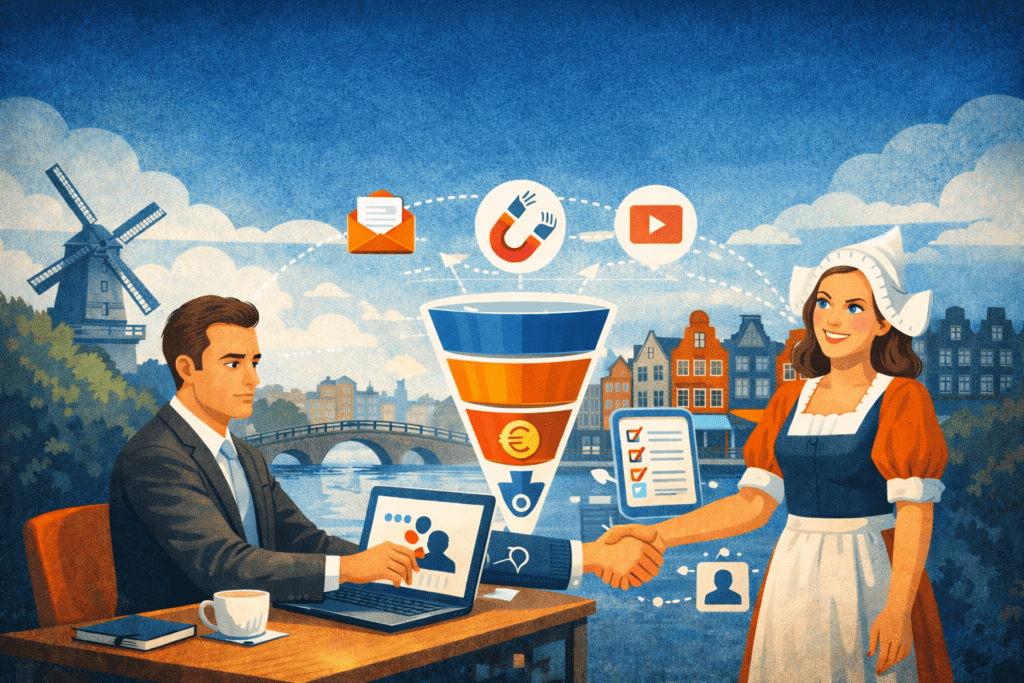
A strong lead generation system isn’t just about attracting attention—it’s about guiding people through a journey.
This journey typically has three stages:
- Awareness: The lead realises they have a problem
- Consideration: They explore possible solutions
- Decision: They choose a provider
Each stage requires different content and messaging. For example, awareness-stage content might focus on education, while decision-stage content highlights your specific offer.
In the Dutch market, this structured approach is particularly important. People rarely make impulsive decisions. They research, compare, and evaluate before committing.
If your funnel only focuses on one stage—like pushing for immediate conversion—you’ll lose a large portion of potential leads.
Landing Pages and Conversion Optimisation
Your landing page is where the magic happens—or doesn’t.
A well-designed landing page should be clear, focused, and easy to navigate. It should communicate your value proposition quickly and guide the user towards a specific action.
Key elements include:
- A strong headline
- Clear benefits
- Social proof (reviews, testimonials)
- A simple form
In the Netherlands, simplicity often wins. Overcomplicated designs or excessive hype can reduce trust.
Small improvements—like clearer messaging or a shorter form—can significantly increase conversion rates.
Leveraging LinkedIn for Lead Generation
Personal Branding for B2B Growth
LinkedIn is one of the most powerful tools for B2B lead generation in the Netherlands, but only when used correctly.
The biggest opportunity lies in personal branding. When individuals—especially founders and leaders—actively share insights and engage with their network, they build visibility and trust.
This doesn’t require a huge following. Even a small, engaged audience can generate meaningful opportunities.
Consistency is key. Posting regularly, sharing experiences, and participating in discussions all contribute to your presence.
Outreach Without Being Spammy
Let’s be honest—LinkedIn outreach has a bad reputation. And for good reason. Many messages feel generic, pushy, and irrelevant.
To stand out, your outreach needs to be personal and value-driven. Instead of jumping straight into a pitch, start a conversation. Show genuine interest. Offer something useful.
In the Dutch market, this approach is essential. People are quick to ignore anything that feels like spam.
Using Paid Advertising Strategically
Google Ads vs LinkedIn Ads
Both platforms have their strengths.
- Google Ads captures intent—people actively searching for solutions
- LinkedIn Ads targets specific professionals and industries
For many Dutch businesses, a combination works best. Google for demand capture, LinkedIn for demand creation.
Budget Allocation and ROI Tracking
Spending money isn’t the hard part—spending it wisely is.
Track your cost per lead, conversion rates, and customer acquisition cost. Without this data, it’s impossible to know what’s working.
Start small, test, and scale what performs.
Automating and Nurturing Leads
Email Marketing and CRM Systems
Once you’ve generated leads, the next step is nurturing them.
Email marketing allows you to stay in touch, provide value, and guide leads through your funnel. A good CRM system helps you manage and track interactions.
In the Netherlands, where trust takes time, this step is crucial.
Lead Scoring and Follow-Ups
Not all leads are equal. Lead scoring helps you prioritise those most likely to convert.
Timely follow-ups also make a big difference. Waiting too long can mean losing the opportunity entirely.
Measuring and Optimising Performance
Key Metrics That Matter
Focus on metrics that reflect real outcomes:
- Conversion rates
- Cost per lead
- Lead quality
- Revenue generated
Vanity metrics like impressions are less important.
Continuous Improvement and Scaling
A lead generation system is never “finished.” It requires постоянное testing, learning, and optimisation.
Small improvements over time can lead to significant growth.
Conclusion
Building a lead generation system in the Netherlands isn’t about chasing quick wins—it’s about creating a structured, sustainable approach that attracts, nurtures, and converts the right audience.
By combining clear messaging, targeted channels, valuable content, and continuous optimisation, Dutch businesses can build systems that deliver consistent results.