Not Understanding the Local Market
Ignoring Regional Differences
Australia isn’t just one uniform market—it’s a mix of different regions, lifestyles, and customer expectations. What works in Sydney won’t always land the same way in Perth or Brisbane. Yet many small businesses make the mistake of applying a one-size-fits-all marketing approach, assuming customers across the country think and behave the same way.
That assumption can quietly drain your marketing budget. For example, urban audiences often respond to convenience and speed, while regional customers might care more about trust, relationships, and community presence. If your messaging doesn’t reflect those differences, it feels disconnected—and people notice.
Local culture plays a bigger role than many business owners expect. Even humor, tone, and timing can vary. Australians appreciate authenticity, but what feels natural in one area can feel forced in another. When your marketing misses that nuance, it creates distance instead of connection.
The fix isn’t complicated, but it does require effort. Start by researching your specific audience, not just “Australians” as a whole. Look at local competitors, read reviews, and pay attention to how people talk about products or services like yours. The closer your messaging reflects real customer language and expectations, the more effective it becomes.
Misreading Customer Behavior
Another common issue is assuming you already know how your customers think. Many small business owners rely on gut feeling instead of actual data, which often leads to misaligned campaigns.
Australian consumers are generally research-driven. They compare options, read reviews, and expect transparency before making decisions. If your marketing skips those steps and jumps straight into selling, it can feel pushy or unconvincing.
There’s also a growing expectation for convenience. Whether it’s fast-loading websites, clear pricing, or easy contact options, customers want a smooth experience. If your business creates friction—slow pages, unclear offers, complicated processes—you’ll lose attention quickly.
Understanding behavior means paying attention to patterns. Where are your customers coming from? What content do they engage with? When do they drop off? These insights help you adjust your strategy in a way that actually reflects reality, not assumptions.
Trying to Target Everyone
Lack of Clear Audience Definition
One of the fastest ways to waste money in marketing is trying to appeal to everyone. It sounds safe—after all, more people means more potential customers, right? In reality, it does the opposite. When your message is too broad, it becomes weak and forgettable.
Australian small businesses often fall into this trap, especially in competitive industries. They try to keep their messaging open and flexible, hoping to attract as many people as possible. But without a clearly defined audience, your marketing lacks focus.
Think about it this way: if you’re speaking to everyone, you’re connecting with no one. Strong marketing feels personal. It addresses specific problems, uses familiar language, and speaks directly to a particular group of people.
Defining your audience doesn’t limit your growth—it sharpens your impact. When you know exactly who you’re targeting, every piece of content becomes more relevant, more engaging, and more effective.
Weak Brand Positioning
Closely tied to audience targeting is brand positioning. If your business doesn’t stand for something clear, customers won’t remember you. And in a crowded market, being forgettable is a serious problem.
Many Australian small businesses struggle to answer a simple question: why should someone choose you over a competitor? If the answer is vague—better service, good quality, fair prices—you’re blending in instead of standing out.
Strong positioning is about clarity. It’s about owning a specific space in the market and communicating it consistently. Maybe you’re the fastest option, the most affordable, the most premium, or the most locally focused. Whatever it is, it needs to be clear and believable.
When your positioning is strong, marketing becomes easier. Customers understand what you offer and who it’s for. And that clarity builds trust faster than any clever campaign ever could.
Inconsistent Branding
Visual Identity Problems
Branding isn’t just about having a logo—it’s about creating a consistent visual experience. Yet many small businesses treat design as an afterthought, leading to mismatched colors, fonts, and styles across different platforms.
This inconsistency creates confusion. If your website looks one way, your social media another, and your ads something else entirely, it weakens your credibility. Customers might not consciously notice every detail, but they feel the lack of cohesion.
In Australia’s competitive small business landscape, perception matters. A clean, consistent visual identity signals professionalism. It shows that you take your business seriously, which makes customers more likely to trust you.
Fixing this doesn’t require a massive budget. Start with simple brand guidelines—choose a consistent color palette, stick to a few fonts, and apply them across all channels. Over time, this consistency builds recognition.
Mixed Messaging Across Channels
Visual inconsistency is one thing, but mixed messaging can be even more damaging. If your tone, offers, or value proposition change depending on the platform, it creates uncertainty.
For example, if your website positions you as a premium brand but your social media focuses on discounts and low prices, customers won’t know what to believe. That confusion often leads to hesitation—and hesitation kills conversions.
Consistency in messaging builds familiarity. When customers hear the same core message repeatedly, it reinforces your brand identity. It also makes your marketing more memorable.
The key is alignment. Every channel should support the same story, even if the format changes. Whether someone finds you through Google, Instagram, or email, the experience should feel connected.
Underestimating Digital Marketing
Poor Website Experience
Your website is often the first impression customers have of your business. If it’s slow, outdated, or difficult to navigate, you’re losing opportunities before they even begin.
Australian consumers expect a smooth digital experience. That means fast loading times, mobile-friendly design, and clear information. If your site doesn’t deliver, people won’t stick around to figure it out.
A common mistake is focusing too much on appearance and not enough on usability. A visually appealing site is great, but if users can’t find what they need quickly, it doesn’t matter.
Think of your website as a tool, not just a brochure. It should guide visitors toward action—whether that’s making a purchase, booking a service, or getting in touch.
Ignoring SEO and Local Search
Search engine optimization isn’t optional anymore—it’s essential. Yet many small businesses in Australia either ignore it or treat it as a one-time task.
Local SEO is especially important. When someone searches for services “near me” or within a specific city, you want your business to show up. If it doesn’t, you’re invisible to potential customers who are ready to buy.
Optimizing for search doesn’t mean stuffing keywords everywhere. It’s about creating useful content, structuring your site properly, and ensuring your business information is accurate and consistent.
When done right, SEO becomes a long-term asset. It brings in traffic without ongoing ad spend and builds credibility over time.
Relying Too Much on Paid Ads
Short-Term Thinking
Paid advertising can feel like a quick win. You launch a campaign, traffic comes in, and for a moment it looks like everything is working. That’s exactly why many Australian small businesses fall into the trap of depending too heavily on ads—they deliver fast results. But here’s the catch: the moment you stop paying, the results stop too.
This creates a cycle where you’re constantly feeding the machine just to maintain visibility. It’s not sustainable, especially for small businesses with limited budgets. Over time, rising ad costs across platforms like Google and Meta make it even harder to maintain profitability.
Short-term thinking shows up when businesses focus only on immediate conversions instead of building long-term brand equity. Ads should support your growth, not carry it entirely. If your strategy depends solely on paid traffic, you’re building on unstable ground.
A smarter approach is to treat ads as one piece of a larger system. Use them to amplify what’s already working—your content, your offers, your brand message. That way, even if you scale back spending, your business still has momentum.
Lack of Organic Strategy
When paid ads dominate your strategy, organic marketing often gets ignored. That’s a mistake. Organic channels—like SEO, content marketing, and social media—take longer to build, but they create lasting value.
Think of organic marketing as planting seeds. You won’t see results overnight, but over time, it grows into something that consistently brings in traffic and leads without ongoing costs. Australian consumers, in particular, tend to trust businesses they discover organically more than those they only see in ads.
Without an organic strategy, you’re missing out on that trust factor. You’re also limiting your reach to people who are actively being targeted, rather than those who are searching or discovering naturally.
Balancing paid and organic efforts gives you the best of both worlds. Ads drive immediate visibility, while organic channels build credibility and sustainability. When these two work together, your marketing becomes far more resilient.
Weak Social Media Strategy
Posting Without Purpose
Social media is one of the most misunderstood marketing tools among small businesses. Many Australian business owners know they “should” be posting, so they do—but without a clear plan behind it.
Random posts, inconsistent schedules, and content without direction don’t deliver results. In fact, they often dilute your brand. If your audience can’t understand what you stand for or what value you provide, they’ll simply scroll past.
Every post should have a purpose. Are you trying to educate, entertain, build trust, or drive action? When you’re clear about your intent, your content becomes more focused and effective.
It’s also important to align your social media with your overall strategy. If your goal is to position yourself as an expert, your content should reflect that. If you want to build community, your posts should encourage interaction.
Consistency matters too—but not just in frequency. Consistency in tone, message, and quality is what builds recognition over time.
Ignoring Engagement
Posting content is only half the equation. Engagement is where real connections happen, yet it’s often overlooked. Many businesses treat social media as a broadcasting tool instead of a conversation.
Australian audiences tend to value authenticity and interaction. If someone comments on your post or sends a message, they expect a response. Ignoring that interaction sends the wrong signal—it makes your brand feel distant or uninterested.
Engagement also affects visibility. Platforms prioritize content that generates interaction, so the more you engage, the more your content is seen. It’s a simple but powerful dynamic.
Building engagement doesn’t require complex tactics. Ask questions, respond thoughtfully, and show genuine interest in your audience. Over time, this creates a sense of community—and that’s something competitors can’t easily replicate.
Not Tracking Performance
Missing Key Metrics
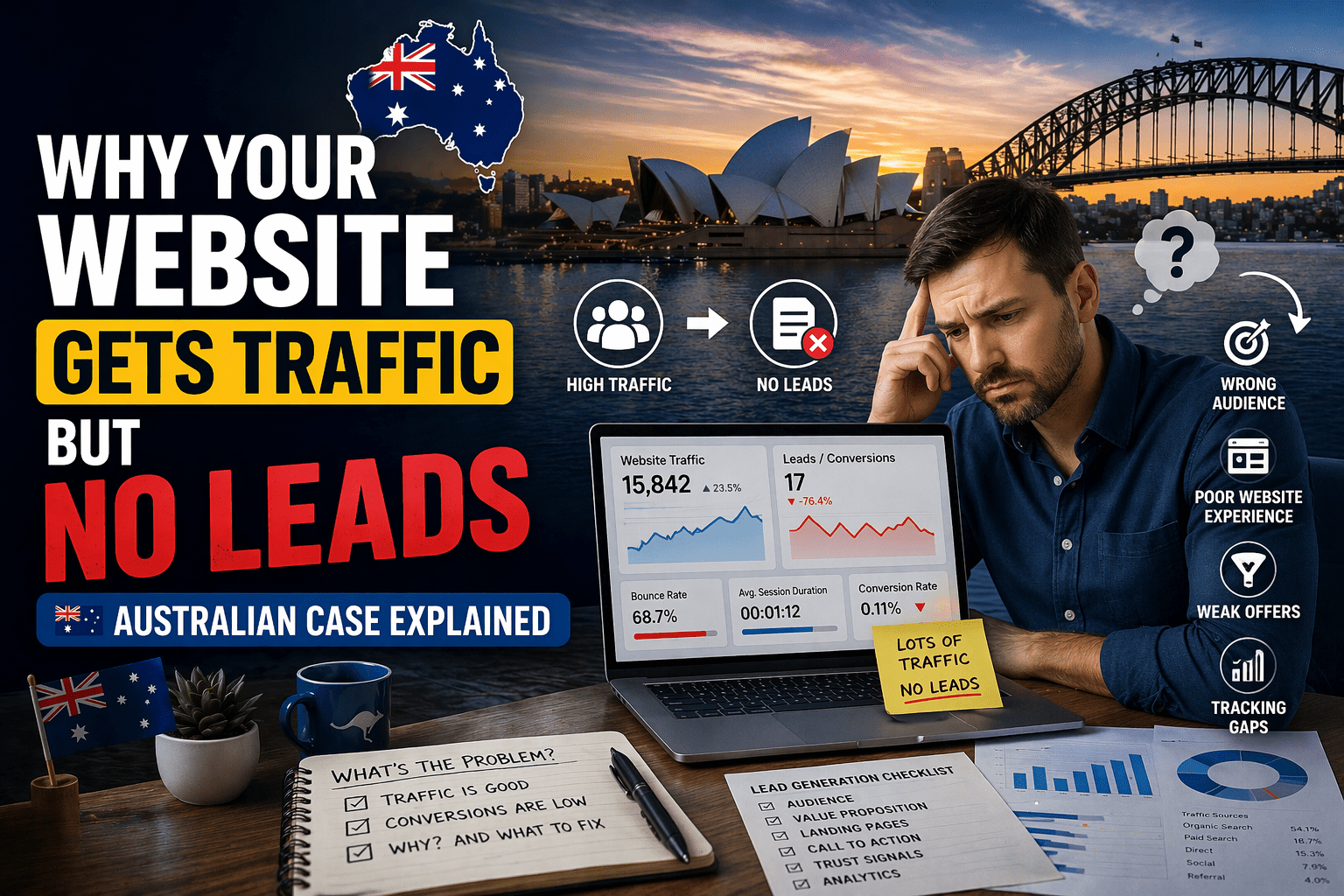
One of the biggest marketing mistakes is operating without clear data. If you’re not tracking performance, you’re essentially guessing—and guessing is expensive.
Australian small businesses often focus on surface-level metrics like likes or impressions, but these don’t always reflect real business impact. What matters more are metrics tied to outcomes: conversions, cost per lead, customer acquisition cost, and lifetime value.
Without these insights, it’s impossible to know what’s working and what isn’t. You might be investing time and money into channels that aren’t delivering results, while overlooking opportunities that could drive growth.
Tracking doesn’t need to be overly complicated. Tools like Google Analytics, social media insights, and CRM systems can provide valuable data. The key is knowing what to look for and how to interpret it.
Making Decisions Without Data
Even when data is available, it’s not always used effectively. Decisions are often based on assumptions, personal preferences, or trends rather than actual performance.
This is where many businesses go wrong. Just because something feels right doesn’t mean it works. Data provides an objective view, helping you make informed decisions instead of relying on guesswork.
For example, you might think a certain type of content performs well because it gets attention. But when you look deeper, it may not lead to conversions. Without data, you’d never know.
Building a habit of reviewing and analyzing performance regularly can transform your marketing. It allows you to refine your strategy, allocate resources more effectively, and improve results over time.
Poor Customer Retention
Focusing Only on New Customers
Many small businesses put all their energy into attracting new customers while neglecting the ones they already have. It’s an easy mistake to make, especially when growth is the main focus.
But here’s the reality: retaining existing customers is often more cost-effective than acquiring new ones. Studies frequently show that increasing customer retention by just 5% can boost profits significantly, sometimes by 25% or more.
In Australia, where trust and relationships play an important role, retention becomes even more valuable. Customers who have already had a positive experience are more likely to return—and recommend your business to others.
Ignoring this opportunity means leaving money on the table. It also makes your business more dependent on constant acquisition, which can be both expensive and unpredictable.
Lack of Loyalty Strategies
Retention doesn’t happen by accident—it requires intention. Without clear strategies in place, even satisfied customers may drift away over time.
Loyalty programs, personalized offers, and consistent communication can make a big difference. Simple actions like follow-up emails, exclusive deals, or recognizing repeat customers help reinforce the relationship.
It’s also about creating a positive experience at every touchpoint. From customer service to product quality, every interaction contributes to whether someone comes back or not.
When customers feel valued, they stay. And when they stay, they become advocates for your brand. That kind of organic growth is far more powerful than any paid campaign.
DIY Marketing Without Strategy
Random Tactics Without Direction
Doing your own marketing can save money, but without a clear strategy, it often leads to scattered efforts and inconsistent results. Many Australian small business owners try a bit of everything—social media, ads, email—without a cohesive plan.
This approach creates activity, but not progress. You might be busy, but you’re not necessarily moving in the right direction. Without clear goals and a structured plan, it’s difficult to measure success or make improvements.
Strategy acts as a roadmap. It defines your audience, your message, your channels, and your objectives. Without it, every decision becomes reactive instead of intentional.
When to Invest in Expertise
There comes a point where doing everything yourself limits your growth. Marketing requires a mix of skills—strategy, design, copywriting, analytics—and it’s difficult to master them all.
Investing in expertise doesn’t mean losing control. It means gaining perspective and improving execution. Whether it’s hiring a consultant, working with an agency, or bringing in freelancers, the right support can elevate your results.
The key is knowing when to make that shift. If your efforts aren’t delivering consistent outcomes, or if you’re spending more time on marketing than running your business, it might be time to bring in help.
Failing to Adapt and Evolve
Sticking to Outdated Methods
Marketing is constantly changing. What worked a few years ago might not work today, yet many businesses stick to familiar methods because they feel safe.
In Australia’s fast-moving digital landscape, this can quickly put you behind. Consumer behavior evolves, platforms change, and new technologies emerge. If your strategy doesn’t adapt, it becomes less effective over time.
Staying informed is essential. Follow industry trends, observe competitors, and pay attention to how your audience interacts with different channels.
Ignoring Market Trends
Adapting isn’t just about keeping up—it’s about staying relevant. Trends like video content, personalization, and AI-driven marketing are shaping how businesses connect with customers.
Ignoring these shifts doesn’t just limit your reach—it can make your brand feel outdated. On the other hand, adopting relevant trends early can give you a competitive edge.
The goal isn’t to chase every new idea, but to evaluate what aligns with your business and audience. When you combine consistency with adaptability, your marketing stays both stable and effective.
Conclusion
Marketing for Australian small businesses isn’t about doing more—it’s about doing the right things with clarity and consistency. Most mistakes come down to a lack of focus, strategy, or understanding of the audience. When you fix those fundamentals, everything else becomes easier. From defining your target market to building a balanced strategy and tracking performance, each improvement compounds over time. The businesses that succeed aren’t necessarily the ones with the biggest budgets—they’re the ones that stay intentional, adaptable, and customer-focused.